

Tag: stress

Feeling the Pressure of a New Year?

A Calm, Practical Guide to Managing Stress & Anxiety in Wadebridge, Cornwall

By Kieran

Keywords: Wadebridge counsellor, Cornwall counselling, stress, anxiety, counselling for men, online counselling, private therapy, stress and anxiety support, counsellor in Wadebridge, counselling in Cornwall

The New Year has a habit of arriving with equal parts hope and heaviness. All across Wadebridge and Cornwall, people tell me they feel they “should” be starting fresh, feeling motivated, or finally getting life sorted. But instead, there’s a familiar mix of overwhelm, tension, and anxiety. As a Wadebridge counsellor offering stress and anxiety counselling in Wadebridge, I hear the same themes every January: racing thoughts, tight chests, irritability, exhaustion, and a sense of being stretched far too thin.

If you’re heading into the New Year feeling stressed or anxious, you’re not alone. This guide walks you through what stress and anxiety counselling looks like in my Wadebridge counselling practice and through online counselling across Cornwall. No pressure. No judgement. Just clear, grounded support.

A Warm Welcome and What to Expect in Counselling

Whether you come to see me for counselling in Wadebridge or join via online counselling, you’ll be met with a calm, friendly hello. You don’t need to have the right words. You don’t need to explain everything perfectly. You set the pace.

In your first stress and anxiety counselling session, I’ll outline what we’ll cover:

  • a brief check on your wellbeing
  • what’s been weighing on you
  • how stress or anxiety shows up in your body
  • what you want life to feel like instead
  • a few practical tools you can start using today

If you’re joining through online counselling, we’ll check privacy, sound, and comfort. Many people in Cornwall prefer online sessions because they can talk openly from home, work, or even their car during a lunch break.

“You don’t have to see the whole staircase, just take the first step.”

Martin Luther King Jr.

Confidentiality, Always

Everything you share in counselling stays confidential. I’ll explain the rare legal limits around safety in plain English, but otherwise this is your space — not your employer’s, not your partner’s, not your insurer’s. Whether you’re coming for private therapy in Cornwall or online counselling, your privacy is respected.

You’re not judged. You’re not labelled. You’re heard.

Stress & Anxiety Are Signals, Not Failures

Many people seeking counselling in Cornwall believe stress or anxiety means they’re weak or failing. But stress and anxiety are signals — signs that something in your life needs attention.
In my work as a Wadebridge counsellor, I often see stress and anxiety linked to:

pressure at work

fear of letting people down

old coping patterns

exhaustion

feeling responsible for everyone else

uncertainty about the future

unresolved grief

loneliness or isolation

burnout from trying to hold everything together

When we treat anxiety as a signal — not a flaw — you can start to understand what it’s trying to tell you. Maybe you’re overloaded. Maybe you’re stretched too thin. Maybe you’ve been running on empty for too long. Stress and anxiety counselling helps you make sense of this.

Carrying more stress than you let on?

Men often push through stress alone, hoping it’ll ease on its own. But pressure builds. Talking it through with someone who gets it can make a real difference.

Talk to Someone Who Gets It

A Brief Assessment to Understand Your Stress & Anxiety

☐ what triggers your stress
☐ how anxiety shows up in your body
☐ the thoughts that spiral
☐ what you do to cope
☐ what happens afterwards
☐ what already helps, even a little
Most people seeking stress and anxiety support in Cornwall have more strengths than they realise. We build on those.

Why the New Year Triggers Stress & Anxiety

January brings a unique kind of pressure. As a counsellor in Wadebridge, I see the same patterns every year.

1. The pressure to “start fresh”
New Year’s resolutions can feel like demands rather than choices. You “should” be healthier, calmer, more productive. That pressure alone can create anxiety.

2. The comparison trap
Everyone online seems to be thriving. New routines. New goals. New achievements. It’s easy to feel behind.

3. The financial squeeze
After Christmas, many people in Cornwall feel the strain — especially with rising costs and family commitments.

4. The return to work
The shift from holiday mode to work mode can feel abrupt. The inbox, the deadlines, the expectations — it all hits at once.

5. The emotional hangover
The festive period can bring up loneliness, family tension, or grief. January often exposes what we’ve been avoiding.

This is where counselling in Wadebridge or online counselling can help you steady yourself.

How Long Are Counselling Sessions?

Standard counselling sessions are 50 minutes. If you book a single session or an urgent clarity session, we’ll use the full time to focus on what’s most pressing right now. Weekly counselling in Wadebridge or online helps you build steadiness week by week.

Consistency matters — especially when you’re trying to break old stress patterns.

Practical Tools You Can Use Today

You won’t leave with theory. You’ll leave with tools shaped around your life in Cornwall.

Grounding techniques
To calm your nervous system when anxiety spikes.
Breathing exercises
Box breathing, slow exhales, and paced breathing — discreet and effective.
Thought‑slowing strategies
To interrupt spirals before they take over.
Values‑led reflection
Instead of trying to “fix” your thoughts, we explore what matters to you.
Small, realistic steps
To reduce overwhelm without adding more pressure.

These tools are simple, discreet, and designed for real life — whether you’re at work, at home, or out walking along the Camel Trail trying to clear your head.

Click to explore stress and anxiety counselling

Common Stress & Anxiety Exercises in Counselling

In stress and anxiety counselling, we might explore:

urge surfing

the 5‑4‑3‑2‑1 grounding method

scheduling “pressure breaks”

journalling prompts

assertive communication

a traffic‑light plan for overwhelm

body‑based resets

reframing techniques

micro‑habits for daily calm

These are offered, not imposed. You choose what feels useful.

If you prefer to work from home, these tools fit easily into online counselling in Cornwall.
What Type of Counselling Works Best for Stress & Anxiety?

There’s no single “right” approach. Many people benefit from a person‑centred style — where the focus is on understanding your emotional landscape, not correcting your behaviour.

As a Wadebridge counsellor, I blend person‑centred counselling with practical tools, always tailored to your life here in Cornwall — not a manual.

“The beautiful thing about learning is that no one can take it away from you.”

B.B. King

If you prefer straightforward, grounded support, you can explore counselling for men or general Cornwall counselling services.

Your Options — Same Care Either Way

Weekly counselling in Wadebridge
Build insight and steadiness over time.
→ Learn more about counselling in Wadebridge

Online counselling across Cornwall
Flexible, confidential support from home or work.
→ Explore online counselling

Single session therapy
One focused session to map your situation and leave with a plan.
→ Single session therapy

Urgent clarity session
When stress peaks and you need calm today.

Feeling the pressure building beneath the surface?

Many men keep going, hoping the stress will settle on its own. But strain has a way of catching up. Opening up to someone who understands can take the weight off your shoulders.

Start a Conversation That Helps

Who Is This Counselling For?

Men and adults who want to feel calmer without shutting down

People who prefer straight‑talking support with warmth

Anyone feeling overwhelmed, tense, or stuck in their head

Cornwall locals wanting face‑to‑face counselling in Wadebridge

Those who need flexible online counselling

People who want practical tools, not lectures.

How We Get Started

Book your first appointment — in Wadebridge or online

Arrive a few minutes early or log in from a private space

We set goals, agree safety steps, and begin tools you can use straight away

“You miss 100% of the shots you don’t take.”

Wayne Gretzky

A Calm Next Step

Stress and anxiety don’t mean you’re weak. They mean you’ve been carrying too much, often for too long. With the right support, you can learn to steady your body, quiet your mind, and move into the New Year with clarity instead of pressure.

If you’re ready for a gentle, practical start, you can meet me for counselling in Wadebridge or through online counselling across Cornwall. No pressure — just clear, grounded support.

Ready to take the next step?

If stress, pressure, or overwhelm are starting to build, you don’t have to handle it alone. A conversation could be the turning point.

Get in Touch
The Ultimate Guide to Surviving University: Mental Health, Motivation & Meaning

By Kieran In Student wellbeing, Stress, Motivation, Identity, Self care

University can be one of the most transformative chapters in a person’s life—but it can also be one of the most overwhelming and the prospect of surviving university can feel tough. Around one in six UK undergraduates report mental health challenges Whether you’re just out of college and going to Freshers week, returning as a mature student, or navigating university alongside work and family, the pressure to “get it right” can feel relentless and this post is to help with surviving university. I clearly remember both feelings of anxiety and excitement at the thought of being more independent and moving on from my life in a big town like Cheltenham and leaving sleepy Cornwall behind.

“You’ll never find peace of mind until you listen to your heart

George Michael

Deadlines. Debt. Homesickness. Social anxiety. Identity questions. The weight of expectation—both internal and external—can build quietly until it starts to affect your sleep, your relationships, and your sense of self. I certainly felt a lot of pressure to hit the ground running when I arrived in my student digs; pressure to make a good impression with flatmates and fellow students. I remember finding simple things such as where should I do my shopping and how will I make sure I eat healthily enough to not get some awful disease quite overwhelming.

This guide is for the student who’s feeling lost in the noise (like I was). The one who’s questioning whether they belong. The one who’s trying to juggle everything and wondering if it’s all too much.

Let’s explore some practical, compassionate strategies to help you not just survive university—but grow through it.

Don’t forget to download my free Surviving University Toolkit at the end of this post!

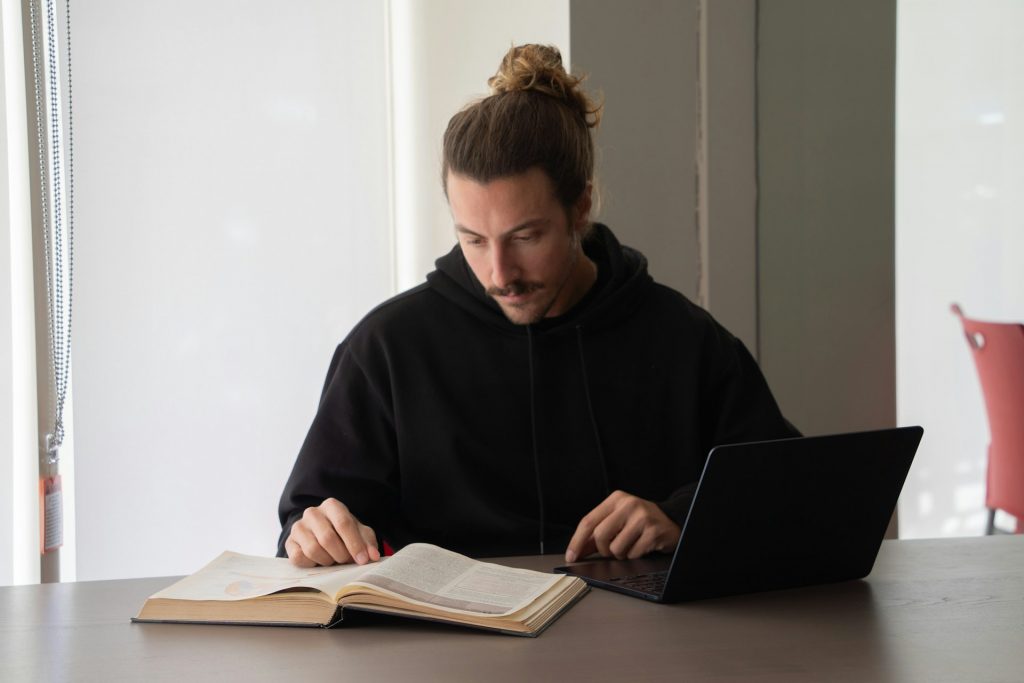
a-young-man-studying

Why University Feels So Intense and how to survive

University isn’t just about lectures and essays—it’s a full-body experience. You’re often:

  • Living away from home for the first time
  • Managing finances, food, and friendships
  • Navigating new identities and beliefs
  • Facing academic pressure and performance anxiety
  • Meeting lots of new people
  • Adapting to a town or city you might not know very well

It’s a lot. And yet, many students feel they have to “just get on with it.” That asking for help is weakness. That struggling means they’re failing.

Let me say this clearly: it doesn’t. Treat getting support from your tutor, lecturer or even a counsellor like me as important as attending lectures, handing in assignments on time and sitting exams.

Struggle is part of growth. And support is part of success.

Technique 1: The “Micro-Moment” Method

When everything feels overwhelming, zoom in.

Instead of trying to fix your whole life, focus on one small moment:

  • Make your bed
  • Drink a glass of water
  • Step outside for 2 minutes
  • Text a friend “thinking of you”

These micro-moments help regulate your nervous system and build momentum. They’re not trivial—they’re foundational.

 “If I cannot do great things, I can do small things in a great way.”

Martin Luther King, Jr. 

Technique 2: The “Permission Slip” Practice

Write yourself a permission slip. Literally.

“I give myself permission to rest.” “I give myself permission to not know everything.” “I give myself permission to feel sad today.”

This simple act can reduce shame and increase self-compassion. It’s a tool I often use in therapy sessions with students who feel trapped by perfectionism.

Technique 3: The “Belonging Inventory”

University can trigger deep questions about identity and belonging. Try this journaling prompt:

  • Where do I feel most like myself?
  • Who makes me feel safe?
  • What spaces energise me?
  • What beliefs no longer fit?

This inventory helps you reconnect with your values and find your people. Belonging isn’t about fitting in—it’s about feeling seen.

Anxious about surviving university?

Schedule a call

Technique 4: The “Stress Spiral Interrupt”

When your thoughts start spiraling—“I’m behind, I’ll fail, I’m not good enough”—use this 3-step tool:

  1. Name it: “I’m catastrophising.”
  2. Ground it: “What’s the actual problem right now?”
  3. Shift it: “What’s one thing I can do today?”

This technique helps you move from panic to presence. It’s not about ignoring stress—it’s about interrupting its momentum.

Technique 5: The “Connection Ritual”

Loneliness is one of the most common struggles at university. Create a weekly ritual that fosters connection:

  • A walk with a flatmate
  • A call to someone back home
  • A shared meal with coursemates
  • A club or society meetup

You don’t have to be extroverted. You just have to be intentional.

I remember feeling isolated myself at times when I was at university, so I can speak from first hand experience as well as being an experienced counsellor who has worked with many students feeling the same way when I say it is important to remain connected and feel part of something.

a-young-female-student-in-a-red-top-is-thinking

When It’s More Than Just Stress

Sometimes the pressure of university reveals deeper challenges—anxiety, depression, trauma, identity confusion. That’s okay. That’s human. Afterall, just because we’ve left friends, family and familiarity behind, it doesn’t mean problems we had before we enrolled are left behind too.

Counselling offers a safe, confidential space to explore these layers. Whether you’re dealing with academic burnout, relationship strain, or emotional overwhelm, support is available.

As a counsellor, I work with students across Cornwall and online to help them find clarity, confidence, and calm. You don’t have to wait until crisis hits. You’re allowed to ask for help now.

“Not all those who wander are lost.”

J.R.R. Tolkein

Final Thoughts on surviving university: You’re Allowed to Thrive

University isn’t just about grades—it’s about growth. And growth is messy, nonlinear, and deeply personal. Surviving university doesn’t have to a slog.

Whether you try the micro-moment method, write yourself a permission slip, or reach out for counselling, know this:

You’re not alone. You’re not failing. You’re becoming.

And that’s something worth celebrating.

Take it from me, someone who spent 4 years wondering if they were making the right decisions, on the right degree course and whether they were building the right future that taking control of life at university is paramount. If you feel as though you need some support from a professional counsellor like me, then contact me here.

Want more support?

📘 Download the Student Survival Toolkit (Free PDF)

A gentle, practical guide to help you manage stress, find belonging, and thrive at university.

Need help with anger?

If you would like to talk to someone confidentially about managing anger, then I can help.

Woman practicing meditationmental health therapy in Cornwall

Stress & Anger Relief: Simple Techniques in Cornwall

Stress and anger are two of the most common emotional challenges men, women, teenagers will face—and yet, they’re often the least talked about. Whether it’s the pressure of work, relationship strain, exam worries or just the weight of daily responsibilities, these emotions can build quietly until they erupt, indeed when they do, they don’t just affect your mood—they impact your health, your relationships, and your sense of self. I know, I’ve been there. It shapes who you are. You become the moody person and if you feel it, others will too.

As someone who offers mental health services for men in Cornwall, across online platforms and to women and young people too, I’ve seen how powerful it can be when people begin to explore their stress and anger—not as flaws, but as signals. Signals that something needs attention. Signals that change is possible. Change that I can help elicit.

Focused workspace with laptop and journal – promoting mindfulness and breathing techniques for stress relief

This blog is for the man, woman or child who’s been holding it all in. The one who’s tired of snapping, tired of feeling overwhelmed, and ready to find a calmer way forward. I’ll share a few practical techniques you can start using today, including one you’ll find in my very first video: Instant Anxiety Relief in Under 30 Seconds With One Simple Trick. And if you’re ready to go deeper, therapy in Cornwall might be the next step.

Why Stress and Anger Feel So Hard to Manage

Let’s start with the basics. Stress and anger aren’t just emotions—they’re physiological responses. When something feels threatening (even if it’s just a tight deadline or a difficult conversation), your body kicks into gear. Heart rate increases. Muscles tense. Breathing becomes shallow. You’re ready to fight, flee, or freeze.

Historically, this response is ancient—it helped our ancestors survive real danger. Think how a cat reacts when it sees a dog if that helps. Yet today, this same reaction is often triggered by things we can’t punch or run from—emails, bills, university worries, what friends think of us, unresolved arguments, or internal pressure to “keep it together.”

In addition, while anger isn’t only expressed by men—far from it—it often becomes the only emotion that feels safe to show. I’m sure many women reading this blog have a son or a partner who only seems to communicate this way. Sadness, fear, vulnerability? Those get buried. But anger? That’s allowed. That’s familiar.

“Energy and persistence conquer all things.” 

Benjamin Franklin

The problem is, when anger becomes your default, it starts to erode everything around you. Relationships suffer. Work becomes tense. Maladaptive coping mechanism like smoking or porn use can seem like the only way out. And your own mental health begins to fray.

That’s where anger management counselling in Cornwall comes in. It’s not about suppressing anger—it’s about understanding it. It’s about learning to respond, not react.

Technique 1: Box Breathing (Featured in My Video)

Let’s start with something simple. Something you can do anywhere, anytime.

Box breathing is a technique used by athletes, military personnel, and therapists alike. It’s designed to calm your nervous system and bring you back to centre.

Here’s how it works:

  1. Inhale for 4 seconds
  2. Hold your breath for 4 seconds
  3. Exhale for 4 seconds
  4. Hold again for 4 seconds
  5. Repeat for 4–5 cycles

This technique activates your parasympathetic nervous system—the part of your body responsible for rest and recovery. It’s like hitting the reset button on your stress response.

I walk you through this in my video: 🎥 Instant Anxiety Relief in Under 30 Seconds With One Simple Trick

This is a great tool for moments when you feel overwhelmed, anxious, or on the edge of an outburst. It’s discreet, effective, and backed by science.

Technique 2: The “Name It to Tame It” Method

This one comes from neuroscience and therapy. When you name what you’re feeling—literally say it out loud or write it down—you reduce its intensity.

In essence, naming an emotion activates the prefrontal cortex, the part of your brain responsible for reasoning and regulation. It helps shift you out of survival mode and into reflection.

Try this:

  • “I’m feeling frustrated because I don’t feel heard.”
  • “I’m anxious because I’m worried I’ll mess this up.”
  • “I’m angry because I feel disrespected.”

You don’t have to fix it right away. Just name it. That alone can reduce the emotional charge.

This technique is especially useful in relationships. Instead of snapping or shutting down, you can say, “I’m feeling overwhelmed right now. I need a minute.” That’s emotional intelligence in action.

Technique 3: Progressive Muscle Relaxation

As I’ve mentioned in at least one of my previous blog posts, this technique continues to resonate with many people who come to me for counselling. That’s because it provides a real sense of actively “doing something” with your whole body—and that kind of physical engagement can genuinely lift your mood.

Building on that, you’ll often find that stress lives in the body: tight shoulders, clenched jaw, fidgeting hands. Progressive muscle relaxation helps you release that tension—one muscle group at a time.

Here’s a quick version:

  1. Sit or lie down comfortably
  2. Starting at your feet, tense the muscles for 5 seconds
  3. Release and notice the difference
  4. Move up to your calves, thighs, stomach, chest, arms, and face
  5. Breathe slowly throughout

This technique is great before bed, after a stressful meeting, or when you feel physically wound up. It’s also something I use in Cornwall therapy sessions to help clients reconnect with their bodies.

Technique 4: The “Stop–Drop–Reflect” Method

This is a cognitive tool I use often in anger management Cornwall sessions. It’s designed to interrupt reactive patterns and create space for choice. It’s really simple.

Here’s how it works:

  • Stop: When you feel anger rising, pause. Don’t speak. Don’t act. Just stop.
  • Drop: Drop into your body. Notice your breath, your posture, your tension.
  • Reflect: Ask yourself, “What am I really feeling? What do I need right now?”

This method helps you move from automatic reaction to intentional response. It’s not about being passive—it’s about being powerful in your choices and giving you agency back.

Technique 5: Journaling for Emotional Clarity

You don’t have to be a writer to benefit from journaling. Just grab a notebook and let your thoughts spill out. No filter. No judgment. I find many counselling clients find journaling very helpful for relieving stress and anger.

Here’s a simple prompt:

  • “What’s been weighing on me lately?”
  • “What am I angry about that I haven’t said?”
  • “What do I wish someone understood about me?”
  • “What has been stressful for me today?”

Writing helps you process emotions that feel tangled or stuck. It’s also a great way to track patterns—what triggers you, what calms you, what helps you feel more like yourself.

Many of my clients in therapy Cornwall use journaling between sessions to deepen their self-awareness and accelerate their growth. It helps to “bridge the gap” between counselling session too.

“In the middle of difficulty lies opportunity.” — Albert Einstein

Why These Techniques Work to help with stress and anger

Each of these tools is designed to interrupt the stress cycle.

When you’re caught in a loop of anxiety or anger, stress or worry your nervous system is in overdrive. These techniques help you shift gears—physically, mentally, and emotionally.

They’re not magic. They don’t erase problems. There’s no silver bullet to alleviate the symptoms of anxiety and anger But they give you space. And in that space, you can choose something different.

That’s the heart of therapy: creating space for change.

What If It’s More Than Just Stress?

Sometimes stress and anger are symptoms of something deeper—trauma, unresolved grief, relationship strain, or identity struggles. That’s where counselling comes in. That’s where an experienced counsellor such as myself can help.

As a sex therapist in Cornwall, I also work with men navigating issues around intimacy, shame, and emotional disconnect. These challenges often show up as anger or anxiety, but they’re rooted in deeper stories.

Counselling offers a safe, confidential space to explore those stories. To unpack what’s been buried. To rewrite the narrative.

Whether you’re dealing with workplace stress, relationship tension, or emotional overwhelm, the mental health services for men in Cornwall I provide are here to support you.

What to Expect from Counselling

If you’re considering therapy, here’s what it might look like:

  • A safe space to talk without judgment or pressure
  • Structured weekly sessions focused on your goals
  • Evidence-based techniques like CBT, PCT, and Solution Focused Therapy
  • Support for anger, stress, anxiety, trauma, and more

You don’t have to have a diagnosis and you don’t have to be in crisis. You just have to be ready to explore what’s going on—and what’s possible. As an experienced counsellor, I can help you with the things that are troubling you. You can contact me here, if you’d like more information or book a session here if you’re ready to begin counselling.

One can choose to go back toward safety or forward toward growth. Growth must be chosen again and again; fear must be overcome again and again.” 

Abraham Maslow. 

Final Thoughts: You’re Not Alone

Stress and anger don’t make you weak. They make you human. Man, woman and child can all benefit from a space to talk. And learning to manage emotions isn’t about perfection—it’s about progress.

Whether you use the breathing technique from my video, try journaling, or decide to book a session, know this: you’re allowed to feel better. You’re allowed to ask for support. You’re allowed to change.

And whether you’re in Cornwall or online, that support is right here.

Ready to take the next step? 📘 Learn more or book your free consultation: 👉 hisownmancounselling.co.uk/?utm_source=blog&utm_medium=website&utm_campaign=present_focus

Need help with anger?

If you would like to talk to someone confidentially about managing anger, then I can help.

A-man-wearing-a-takeaway-bag-on-his-head-in-a-mock-HAZMAT-style

Push Through the Pandemic With Solid Self-Care Strategies

I’d like to say a big thank you to hisownman’s guest blogger Cheryl Conkin over at Wellcentral.info for writing this awesome article!

Initial research suggests that COVID-19 has an adverse effect on mental health, and mental health appears to improve when restrictions are lightened and individuals are not relegated to just their homes. While this makes sense to many, it can still be difficult to revert back to your old routine, especially for men who have shifted to working from home and taking on even more household responsibilities.

Embracing the art of self-care is just as important for men as it is for women, and Hisownmancounselling.co.uk wants to help. Here are a few easy ways any man can boost his spirits in the days following the COVID-19 pandemic.

“To love oneself is the beginning of a lifelong romance. ” – Oscar Wilde

Revamp Your Surroundings

If you have been stuck at home for a while, you may be tired of staring at the same layout and the same decor. Tense feelings may also build up if your family is arguing and complaining or being critical of one another.

You can relieve built-up tension by turning your home into a fresh and vibrant space in a few easy steps:

  • Open the curtains to let more light in.
  • Move the furniture around for a fresh perspective.
  • Add some plants to a room.
  • Declutter spaces like doorways and offices.
  • Add mirrors to make a space look larger.

“An empty lantern provides no light. Self-care is the fuel that allows your light to shine brightly.” – Unknown

Sort Out Your Grooming Routine

It is all too easy to go for days without styling your hair, shaving or even showering. While a shaggy look can be appealing, try not to neglect your grooming routine, especially during a quarantine.  If you have not done so yet, research which skin and hair products are best suited for your needs. Some products you may wish to add to your cabinet include foot lotion, facial scrub and eye cream (for those dark circles).

Aim for Quality Sleep

If there is a lot on your mind as far as work and health are concerned, it can be difficult to get a good night’s sleep. Sleep deprivation can affect everything from your productivity to your driving ability. If you are having trouble sleeping, you may wish to consult your physician about supplements and try turning in earlier.

“If you get tired, learn to rest, not to quit.” – Banksy

Take a Breather Once a Day

“Me time” is not a concept that is exclusively used for mums. Men have a lot to deal with, too, and if you do not have some sort of outlet, your pent-up feelings could burst forth in a way you may regret. Learning when you need to step away can be difficult. Try scheduling in a specific block of your day that you can use to be alone or do something you enjoy. If you are still struggling with anger management or overwhelming feelings, you might consider talking with a counsellor.

Try this

Sit somewhere quiet with a coffee. Close your eyes and notice how the cup or mug feels. Notice the heat coming through the mug to your hands. Take a deep sniff of the coffee. Notice how it smells. These actions “bring you back to the present” and can help you feel more relaxed and calm.

Overhaul Your Diet

The foods you eat play a direct role in your overall health. Ready-made and processed foods can contribute to feelings of depression and anxiety. The BBC notes choosing to indulge in healthy amounts of fruits and vegetables as a part of a healthy lifestyle, however, could add years to your life. There are even particular foods that are great for men to eat regularly:

  • Beans are great for the heart and testosterone levels.
  • Oysters are heart-healthy and boost your immune system.
  • Grapes are also good for testosterone levels.
  • Watermelon improves blood circulation.
  • Garlic aids in fighting disease and infection.
  • Eggs are a good source of vitamin D.

“A man cannot be comfortable without his own approval.”
Mark Twain

Go Easy on Yourself

Most importantly, in the middle of a global pandemic, you need to go easy on yourself. Find what helps you feel more like your old self, whether that is changing around the furniture, going to bed earlier or switching up the snacks you choose. With a little focus on yourself from time to time, you may find you enjoy life more than before.

Connect with Hisownmancounselling.co.uk for more information on living a happy and healthy lifestyle!

Need some help?

Home & Contact & About & Blog & Online Counselling & Boys and Teenagers